Tampilkan postingan dengan label Diet and Exercise. Tampilkan semua postingan

Sabtu, 27 Desember 2014

How to Love the Exercises You Hate


In a perfect world, we would find exercises we love and stick with them. There would always be room in your Zumba class, it would always be offered at just the right time, and your ex-boyfriend’s new girlfriend would be required to stay ten miles away from it at all times. Unfortunately, this isn’t always the case. Sometimes, what’s best for us isn’t what we necessarily find the most fun. Few people love running or doing squats.

When willpower isn’t enough, here are a few ways to learn to love exercises you hate.

Join a 30 Day Challenge
Let’s say that your personal trainer suggested that you do more planks. So what if you can barely get yourself off the floor without shedding tears and a little dignity? Search Facebook for a “30 day plank challenge” or download a similar app. These challenges encourage you to add a little bit, day by day, until you’re a master by the end of the month. There’s one for every love-to-hate exercise: squats, push ups, planks, you name it.
Before you start, decide on a special treat you’ll give yourself if you complete the challenge. Massage? Manicure?

Sign Up for a 5k
Sign up for the most fun-sounding 5k you can find. It’s a booming industry these days, between color runs, foam runs, and all sorts of crazy themed runs. Rope a few friends along with you, then start getting ready. When you’re logging those training miles, think of how great you’ll feel when you cross the finish line at the race.

Walk to Food
Hey, if you’re going to brunch anyway, pick a place a mile (or two or three) away and walk there. Call it an “urban hike.” Just remember that a walk around the corner to the convenience store does not “burn off” an ice cream sandwich.

Be Accountable
Have you ever thought about getting up early, before work, to go to the gym or go running? Thinking is about as far as those plans usually get. Get a buddy to get up early with you, and you’ll have more fun too.

If you’re the competitive type, find a few friends or co-workers who will pitch in a few dollars to a pool. Everyone sets an exercise goal, and whoever reaches their goal splits the pot.
Start a blog to track your progress and invite your friends and family to follow along. If you’re not the public type, start an exercise journal. Track your daily progress. It’s easier and faster to run your mile rather than to make up a creative excuse not to do it.

Make It a Game
Let’s face it—running can be a real snoozefest. Running from zombies? Well, that’s kind of interesting. The “Zombies Run” app, and others like it, turn running into a game. Interval training is built in as sprints as you “outrun zombie hordes.” Hey, it doesn’t hurt to be prepared.

Listen to the Right Music
Somehow, watching the Food Network on the TV attached to the elliptical just doesn’t motivate you as much as listening to some uptempo, driving music. Create your own playlist, or if you get tired of that, check out the “workout” genres in Pandora for stations like “Pop and Hip Hop Power Workout,” “80s Cardio,” or whatever gets your blood pumping. Your workout will fly by, three minutes at a time.


Source: 3fatchicks.com

Kamis, 16 Oktober 2014

The Quick and Healthy 3 Step Guide to a Flat Stomach


The 3 steps to a flat stomach: eat right, burn more calories, and do core exercises. Here’s how to get a flat stomach fast by doing all of the above right.

Spending hours at the gym but still can’t seem to get rid of that extra belly fat? To get a flat stomach you have got to burn calories. To burn calories fast, you have to move. The harder and faster you move, the less time you can keep it up. That’s why intense, short cardio is the best way to flatten your stomach.

Everybody has a six-pack if not a flat stomach. For most of us, however, that six pack is hidden under a rather thick layer of adipose tissue. In order to let our abs see the light of day, we have to burn off the fat first. That involves 3 key elements:

1) A clean eating plan – abs are made in the kitchen!

2) An effective cardio program based around high intensity interval training to burn maximum fat during and after your workout.

3) Targeted core exercises to sculpt your abdominal area.
By itself, then, the world’s greatest ab routine will never allow you to get a flat stomach. In tandem with a sensible eating plan and a 3 x per week cardio routine, however, it will slim and sculpt a core to be proud of. With no further ado, here’s how to get a flat stomach fast:
Let’s consider each of these 3 key elements to getting a flat stomach one at a time.

How to Get a Flat Stomach by Eating Better

8

Whoever came up with the phrase “Abs are made in the kitchen” sure knew what he was talking about. It doesn’t matter how hard you work out, if you haven’t nailed your eating plan, you will never get a flat stomach. Here, in a nutshell, are the keys to getting your nutrition right:

1. Eat Every 3 Waking Hours
Forget about the traditional 3 meals per day eating plan. It is bad for you. From now on, you will eat more often and on a regular schedule. Each meal will be about the same size. Following this pattern will:
  • Provide a steady flow of fuel and help to keep up your energy levels
  • Help to reduce appetite, control cravings, and prevent binges
  • Provide the extra energy you’ll need to power your workouts
  • Boost your metabolism, allowing you to burn more calories while at rest
  • Keep your body in an anabolic state 24 hours a day.
2. Calculate Your Daily Caloric Requirements and Work Backwards
The average number of calories required by men to maintain their weight is 2,800 and 2,100 for women. To lose fat, reduce the total by 350 calories. That is an achievable, long-term restriction that will not leave you feeling depleted or deprived. Now that you have a total, divide it by the number of meals that you will eat throughout the day.

Example: Male aged 41. Total daily calories = 2,450. Meals per day = 6 (eating every 3 hours). Calories per meal = 2,450 divided by 6 = 408. 
From here, you can work out your carbohydrate, protein, and fat requirements at every meal. Go with 50% carbs, 30% protein and 20% healthy fats. So, our 41 year old guy’s macronutrient breakdown per meal would look like this:
  • Carbohydrate = 1,225 calories total or 204 calories per meal
  • Protein = 735 calories total or 123 calories per meal
  • Fat = 490 calories total or 82 calories per meal
3. Get a Good Supply of Good Fats and Cut Out Bad Fats by:
  • Avoiding foods that are deep fried in oil
  • Avoiding trans fats, hydrogenated and partially hydrogenated foods
  • Reducing your intake of saturated fats
  • Increasing your intake of Essential Fatty Acids (EFAs) – especially Omega-3. Eat fatty fish such as salmon, trout, sardines and herring
  • Increasing your consumption of avocados which contain EFAs
  • Eating plenty of nuts and seeds.
4. Eat 1 gram of Protein for Every Pound of Body Weight

9

Make sure that you are getting a high quality protein source with every meal. You should be taking between 25 and 40 grams of protein with every meal (divide your body weight by 6 to work out your individual number). Take protein in the form of a shake 20 minutes before and directly after your exercise sessions.

5. Eat Natural, Unprocessed Carbohydrates
Contrary to recent media reports, carbs are not your enemy. They are, in fact, your body’s preferred energy source. Cut out all processed carbs – focus on those made with white sugar and white flour. Make sure that you eat both starchy (grains and starchy vegetables) and fibrous (leafy greens) carbs at each meal. Fill up your plate, however, with more fibrous and fewer starchy carbs. Eat fruit every day.

6. Drink More Water/Cut Back on All Other Drinks

10

Yes, you’ve heard it before, but this time take it on board. Carry a water bottle with you everywhere. Sip it every 15 minutes or so. If you are a man, you should be taking in 3.5 liters of water each day. Women should target 2.5 liters. That may seem like a lot and it is. Work up to it. You will not have a desire for other drinks when you up your water intake That’s good. Sodas and fruit drinks are swamped with sugar. So is alcohol. Cut back on it if you are serious about getting in shape.

7. Schedule a Cheat Meal
Food is not only fuel; it is also a pleasurable experience. Plan to stick to the above 6 steps religiously 90% of the time. A cheat meal will allow you to eat whatever you want without feeling guilty about it. Just make sure that your cheat meal is confined to that 10% of the time and is scheduled into your nutritional program.

How to Get a Flat Stomach by Burning More Calories with Cardio Exercises

To get a flat stomach, you have to burn calories. To burn calories fast, you have to move. The harder and faster you move, the less time you can keep it up. That’s why intense, short cardio is the best way to flatten your stomach. High Intensity Interval Training will not only burn a ton of calories while you’re doing it, it will initiate the excess post-exercise oxygen consumption effect. This process will rev up your metabolism for 24-hours after your workout.

Be aware that High Intensity Interval Training is hard work. You need to be prepared to push beyond your comfort zone – and then keep going. Never slow down, always dig deeper and don’t leave anything in the tank.

To perform this version of the HIIT training programme, you’ll be alternating between mountain climbers and three other movements to get in a 15 minute sweat session that will have you doing 40 seconds of work and ten seconds of rest for 18 rounds. Here’s what you’ll be doing:

Mountain Climbers

11

Starting in the plank position (extended arms on the floor, shoulder width apart, body flat, legs straight and together), as if you were starting a sprint. Now alternate bringing your knees to your chest, going as quickly as possible. Keep your back flat and butt down. Continue for 40 seconds.
Rest 10 seconds

Scissors
From the same starting position, jump your feet out as wide as possible. Now return to the starting position. Keeping control and your butt down, repeat as many times as you can in 40 seconds.
Rest 10 seconds

Mountain Climbers
Rest 10 seconds

Tuck Jumps

12

From the same starting position, jump forward with both feet together. Your knees should come as far forward as possible. Return to the starting position.
Rest 10 seconds

Mountain Climbers
Rest 10 seconds

Fork and Knife Jumps
From the same starting position, with your feet together, jump toward the right hand. Return to the starting position and jump to your left hand. This is different to tuck jumps because you are moving at an angle.
Rest 10 seconds

Mountain Climbers
Rest 10 seconds

How to Get a Flat Stomach Faster by Doing Core Workouts

To get a flat stomach, you are going to have to give some serious attention to the muscles of your core. It’s interesting to note that the best way to hit the muscles of your core (that’s the abdominals, obliques, and spinal erectors) is not to focus exclusively on exercises that target them directly.

Compound exercises that work both the legs and the upper body have been shown to be more effective than the traditional abdominal exercises like crunches and sit-ups when it comes to achieving that flat stomach look.

The following circuit requires nothing more than a pair of light (2-5 lb) dumbbells and a bit of space. It involves 6 exercises, which are performed sequentially with no rest between them. At the end of the circuit, take a 2 minute break and then repeat the circuit 2 more times. This workout should be performed 3 times per week on alternate days.

The Workout:
Jumping Split Lunges

13

Standing feet together and with hands on hips, bend your knees and jump up landing with your right foot in front of you and your left foot behind. You’ll want to get as deep a bend in your knees as possible. Do 12 reps per leg.

Halo Deadlift
Grab a light dumbbell and squat down fully with the weight hanging between your legs. Keeping your back arched rise to a standing position as you lift the weight and rotate it around your head in a circular motion. Return to the start position and repeat. Do 12 reps.

Dumbbell Rotational Jumps

14

Start in the same position as the previous exercise, but this time the dumbbell should be held in a top curl position. From a bottom squat, perform a rotational jump that allows you to spin 180 degrees before landing. Jump from the bottom position into your next rep. Do 12 reps.

Elbow, Plank, Row
Start by lying on your stomach in a plank position, resting on your elbows. The only points of contact with the floor should be your toes and forearms. Position a pair of dumbbells on the outsides of your arms. One arm at a time, rise up to grab the dumbbells. Now pull the dumbbell in your right hand towards your chest. Repeat with your left hand. That’s one rep. Do 6 reps.

Mountain Climbers
Start in a traditional push-up position while keeping your core tight. Bring one knee up as close to your chest as possible while balancing on the opposite foot, and then quickly switch legs. Keep your butt down and your palms on the floor at all times. Do 12 reps.

Plank

15

Lie face down on the floor and prop yourself up on your elbows so that your body is supported only by the balls of your feet, elbows, and forearms. Keep your back straight in one solid line. Hold this position for 30 seconds.

Flat Stomach Benefits

16

While it’s great to be able to fit into your jeans again, the biggest benefit of training the core is safety not aesthetics. Virtually every movement we make, from getting out of bed in the morning to reaching up for a jar in the pantry, requires use of the core muscles. Strong core muscles can prevent a litany of problems in your life now and in the future. These include lower back pain; sprains, strains and tears; and muscular imbalance.

Source: healthdigezt.com

Top 15 Workout Tips of All Time


Want to know the secrets to getting a toned, trim body in record time? We did too, so we went straight to the top personal trainers, exercise physiologists and fitness instructors for the ultimate moves and motivation tricks to kick a fitness routine into high gear. Put a few of these tips into action each week and you’re guaranteed to see faster results!

1. Tone Up on the Treadmill

“Save time at the gym with this 10-minute cardio/sculpt session: Hop on a treadmill holding a three- to five-pound dumbbell in each hand, and set the speed to a brisk walk. Do a one-minute set each of shoulder presses, biceps curls, triceps extensions, side laterals, front laterals and standing triceps kickbacks one after another as you walk. I’s an amazing upper-body challenge that also gets your heart pumping. Do this series two or three times each week. As you improve, work up to doing four-minute sets.”

– Michael George, trainer and owner of Integrated Motivational Fitness in Los Angeles

2. Power Up Your Runs

“Adding wall sits to the end of every run will strengthen your quads, hamstrings and glutes, improving your speed and endurance. Lean against a wall with your feet shoulder-width apart, then squat until your knees are bent at 45 degrees. Hold for 30 to 60 seconds; work up to doing 10 sets. Add a challenge by including heel raises: Lift your left heel, then the right, then lift both together twice.”
–Mindy Solkin, owner and head coach of the Running Center, New York City

3. Chart Your Progress

“Stay motivated using a fitness report card. Jot down these subjects: Cardio, Muscle Conditioning, Flexibility and Attitude. Set goals (for example, doing 10 “boy” push-ups) and grade yourself A through F at least four times a year. When you see how much you improve, you’ll want to stay in great shape.”
–Ken Alan, Los Angeles–based personal trainer

4. Try This All-in-One Toner

“A side-step squat with wood chop works your arms, torso, abs, back, legs, inner thighs and butt. Stand with your feet shoulder-width apart holding a three- to four-pound medicine ball in your hands. Bend your arms up so that the ball is at eye level over your right shoulder. As you bring the ball toward your left knee, step out with your left leg and bend it no further than 90 degrees, keeping your right leg straight. Return to the starting position. Do 10 to 15 reps and repeat on the other leg.”
–David Kirsch, trainer and author of The Ultimate New York Body Plan (McGraw-Hill, 2004)

5. Break Out the Shovel

“Why pay someone to clear snow from your driveway? Besides burning nearly 400 calories per hour, shoveling snow develops muscular endurance and power. But be safe: Minimize the amount of snow on each shovelful, and bend from your knees and hips, not your back.”
–Tom Seabourne, Ph.D., exercise physiologist and sports psychologist at Northeast Texas Community College in Mount Pleasant, Texas

6. Work Out During Your Workday

“Sit on a stability ball to strengthen your core, and keep dumbbells or exercise tubing at your desk. Squeeze in 12 to 15 reps of exercises like dumbbell curls, overhead presses and ab crunches; aim for two or three sets of each. This gives you more free time to fit in fun workouts like biking or tennis.”
–Gregory Florez, personal trainer and CEO of Salt Lake City — based FitAdvisor.com

7. Take This Jump-Rope Challenge

“The best cardio workout is the jump-rope double-turn maneuver. It’s intense: You’ll burn about 26 calories per minute! Do a basic jump for five minutes, then jump twice as high and turn the rope twice as fast so it passes under your feet twice before you land. This takes timing, patience and power. But you’ll get in great shape just by working at it.”

–Michael Olajide Jr., former number one world middleweight contender and cofounder/trainer at Aerospace High Performance Center in New York City

8. Give Yourself a Break

“You don’t have to be a fitness saint to get results. Follow the 80/20 plan: Eighty percent of the year, you’ll exercise regularly and eat well. Know that you’ll slip 20 percent of the time due to holidays and work deadlines. When you accept that fitness isn’t an all-or-nothing proposition, you’re more likely to stick with it for life.”
–Maureen Wilson, owner/personal trainer/instructor, Sweat Co. Studios, Vancouver, B.C.

9. Get a Jump on Weight Loss

“Add plyometric box jumps to your workout to improve your cardiovascular stamina and leg strength — you’ll really sculpt your hamstrings, quads and glutes. Find a sturdy box that';s at least one foot high [like a Plyo Box, $139.95; 888-556-7464; performbetter.com]. Starting from a standing position, explosively jump to the middle of the box, then jump back down. Repeat 20 times.”
–Michael George

10. Don’t Skimp on Carbs

“Your body needs them to fuel a workout, so reach for fruit or high-fiber crackers an hour beforehand. If you’e exercising for 90 minutes or longer, include some protein so that the carbs break down more slowly, giving you longer-lasting energy. Your best bets: low-fat cheese and crackers, trail mix or half of a peanut butter and jelly sandwich.”
–Cindy Sherwin, R.D., personal trainer at the Gym in New York City

11. Maximize Your Crunches

“Don’t relax your abs as you lower your chest away from your knees during a crunch — you get only half the ab-toning benefit! To get the firmest abs possible, you need to sustain the contraction on the way down.”

–Steve Ilg, founder of Wholistic Fitness Personal Training and author of Total Body Transformation (Hyperion, 2004)

12. Intensify Your Push-Up

“Squat-thrust push-ups get you in great shape because they work your upper body, core and lower body and improve agility, strength and endurance all at once. From a standing position, bend down, put your hands on the floor shoulder-width apart, and jump your feet back into plank position.

If you’re strong, cross your ankles; otherwise, jump your feet wide apart. Do a push-up, then jump your feet together or uncross your ankles. Jump your feet back to your hands and stand up. Do eight reps total, rest for one minute, and repeat.”
–Keli Roberts, Los Angeles — based trainer

13. Paddle Your Way to Flatter Abs

“Go kayaking to get a taut stomach — it’s ideal because much of your rowing power comes from your core. Mimic the motion and resistance of the water at home by looping an exercise band around the bottom of a table leg or other fixed object. Sit on the floor with legs extended, knees slightly bent; grasp one end of the band in each hand. Rotate your torso to one side as you bring the elbow back slightly, then switch sides. Do three sets of one to three minutes each.”

–Barbara Bushman, Ph.D., associate professor of health, physical education and recreation at Southwest Missouri State University

14. Make Over Your Running Routine

“Unless you’re training for a marathon, skip long, slow, distance running — sprinting builds more muscle. Add a few 10- to 60-second sprints to your run, slowing down just long enough to catch your breath between them.”
–Stephen Holt, 2003 ACE Personal Trainer of the Year

15. Super-Sculpt Your Butt

“Get great glutes by targeting the muscles and connective tissues buried deep in your body. To hit them, do high-intensity squats, such as jump squats. Then, blast off butt flab with cross-country skiing, bleacher running and stair climbing.”
–Steve Ilg

Source: healthdigezt.com

10 Ways to Add Healthy Fats to Low Carb Diet


One of the most common mistakes people make on a low-carb diet is not eating enough fat.
If you eat low carb AND low fat, that leaves you with nothing but protein.

If you eat nothing but protein, you will eventually start feeling hungry, crappy and abandon the diet.
Every population that has thrived on a low-carb diet, such as the Inuit or Masai, have eaten lots of fat.
They cherished the fatty parts of the animal and the organs. To them, “lean meat” was dog food.

Here are 10 things you can do to make sure that you eat enough fat on a low-carb diet.

Be aware that you do NOT have to do all of these, they are merely suggestions if you struggle to get enough fat in your diet.

1. Choose The Fattier Meats and Fishes

At the grocery store, choose the fattier cuts of meat, preferably from grass-fed/pastured animals.
Stay away from the chicken breasts, the lean steaks and the pieces where the fat has been removed.
Choose fatty fish like salmon. They’re tastier, fattier and healthier.

2. Use More Fat When Cooking

If you have some remnants of “fat phobia” after decades of brainwashing by the media, now is the time to get over it.

I suggest you face your fears and put oodles of fat on your food when cooking.
A few tablespoons of butter or coconut oil can easily give a bland, dry meal a powerful richness, plus they go with just about anything.

Olive oil is also excellent to add some flavor and richness to a salad.
For high-heat cooking, choose saturated fats.

3. Take Cod Fish Liver Oil

There are many good reasons to take a fish oil supplement, adding fat to the diet is one of them.
One tablespoon of cod fish liver oil will also give you plenty of Vitamin D3, Vitamin A and Omega-3s.

4. Eat Eggs, Nuts and Avocados

Eggs are among the healthiest foods on the planet.
Very satiating, incredibly nutritious and contain an excellent ratio of amino acids.
Eggs are also high in saturated fat and cholesterol, which is a good thing if you ask me. Choose pastured and/or Omega-3 enriched eggs.

Nuts are very nutritious and also high in fat. Eat a handful of nuts a few times a week and you will up your fat intake quite a bit while satisfying your body’s need for other important nutrients like magnesium and Vitamin E.

Avocados are another healthy, delicious, high-fat food. You can eat an avocado with almost anything and it is very rich in healthy monounsaturated fats.

5. Put Heavy Cream in Your Coffee

Sometimes I like to put some heavy whipping cream into my coffee.
It’s delicious and tends to have an appetite reducing effect. If I start to get a little hungry and there’s a while until my next meal, a cup of coffee with some heavy cream will usually take care of it.

6. Eat Mayonnaise and Guacamole

A great way to include more fats in your low carb meal plan is to use condiments like mayonnaise and guacamole. They are nutritious, high in fat and go with almost anything.
Just make your own or at least read the ingredients labels before buying.
If you choose to make your own mayo, use butter and olive oil instead of any nasty vegetable oils.

7. Use Sauces Like Bearnaise

There are many sauces you can eat, for example Bearnaise that is composed mostly of butter and egg yolks.
Any sauce that uses lots of butter, heavy cream or other high-fat foods is a great addition to pretty much any meal.

8. Use Fatty Cheeses

You can use full-fat cheeses to turn any bland meal into a delicious treat.
I often put some cheese on my foods, but occasionally I just eat it raw as a snack.

9. Eat Some Dark Chocolate

Another high-fat food that you may be pleased to read about is dark chocolate. If you choose a brand that is organic and has a high cocoa content (70-90%) then it will be a great source of antioxidants and healthy fats.
Think of it as an occasional treat, not a meal.

10. Eat Bacon

This one speaks for itself.

 Source: healthdigezt.com

Sabtu, 11 Oktober 2014

12 Strange-But-True Health Tips

1.  Crazy health tricks that really work

1

Many methods to improve your health are pretty straightforward: to lose weight, eat less and exercise more; to boost your energy, get more sleep; to prevent dehydration, drink more water. Others, however, are totally counterintuitive. The following 12 tips really do work—but they may leave you scratching your head.

2.  Drink coffee to have a better nap

2

In a Japanese study that examined how to make the most of a nap, people who took a “coffee nap”—consuming about 200 milligrams of caffeine (the amount in one to two cups of coffee) and then immediately taking a 20-minute rest—felt more alert and performed better on computer tests than those who only took a nap.

Why does this work? A 20-minute nap ends just as the caffeine kicks in and clears the brain of a molecule called adenosine, maximizing alertness. “Adenosine is a byproduct of wakefulness and activity,” says Allen Towfigh, MD, medical director of New York Neurology & Sleep Medicine. “As adenosine levels increase, we become more fatigued. Napping clears out the adenosine and, when combined with caffeine, an adenosine-blocker, further reduces its effects and amplifies the effects of the nap.”

3.  For healthy teeth, don’t brush after eating

3

Don’t brush your teeth immediately after meals and drinks, especially if they were acidic. Acidic foods—citrus fruits, sports drinks, tomatoes, soda (both diet and regular)—can soften tooth enamel “like wet sandstone,” says Howard R. Gamble, immediate past president of the Academy of General Dentistry. Brushing your teeth at this stage can speed up acid’s effect on your enamel and erode the layer underneath. Gamble suggests waiting 30 to 60 minutes before brushing.

4.  To wear a smaller size, gain weight

4

Muscle weight, that is. If two women both weigh 150 pounds and only one lifts weights, the lifter will more likely fit into a smaller pant size than her sedentary counterpart. Likewise, a 150-pound woman who lifts weights could very well wear the same size as a 140-pound woman who doesn’t exercise. The reason:

Although a pound of fat weighs the same as a pound of muscle, muscle takes up less space, says Mark Nutting, fitness director of SACO Sport & Fitness in Saco, Maine. “You can get bigger muscles and get smaller overall if you lose the fat,” he says. “The bulk so many women fear only occurs if you don’t lose fat and develop muscle on top of it.” Cut back on calories and add weight to your workout to lose inches.

5.  To eat less, eat more

5

Grabbing a 100-calorie snack pack of cookies or pretzels may seem virtuous, but it’s more likely to make you hungrier than if you ate something more substantial, says Amy Goodson, RD, dietitian for Texas Health Ben Hogan Sports Medicine. “Eating small amounts of carbohydrates does nothing but spike your blood sugar and leave you wanting more carbs.” Goodson recommends choosing a protein such as peanut butter or string cheese with an apple. “They are higher in calories per serving, but the protein and fat helps you get full faster and stay full longer—and you end up eating fewer calories overall,” she says.

6.  Skip energy drinks when you’re tired

6

Energy drinks contain up to five times more caffeine than coffee, but the boost they provide is fleeting and comes with unpleasant side effects like nervousness, irritability, and rapid heartbeat, says Goodson. Plus, energy drinks often contain high levels of taurine, a central nervous system stimulant, and upwards of 50 grams of sugar per can (that’s 13 teaspoons worth!). The sweet stuff spikes blood sugar temporarily, only to crash soon after, leaving you sluggish and foggyheaded—and reaching for another energy drink.

7.  Drink water when you’re bloated

7

When you feel bloated, drinking water sounds as if it would only make matters worse, but it can often help, says James Lee, MD, gastroenterologist with St. Joseph Hospital in Orange, Calif. If you’re on a high-fiber diet, for instance, then your body needs more water to work more efficiently, says Dr. Lee. “Water mixes with water soluble fiber and makes it into a gel like substance. This affects the motility of the gut and reduces the symptom of bloating.” Drinking more water   also relieves bloating caused by dehydration. When you’re dehydrated, your body clings to the water your body does have, causing you to puff up.

8.  Ditch diet soda to lose weight

8

You should ditch all soda, including diet. Research from the Johns Hopkins Bloomberg School of Public Health revealed that overweight and obese adults who drank diet beverages ate more calories from food than those who drank regular soda. Additionally, a University of Texas study found that diet soda drinkers had a 70% greater increase in waist circumference than non-drinkers over the course of about 10 years.

“In addition, many people think ‘low-fat,’ ‘low-sugar,’ or ‘light’ means fewer calories, but that’s not always true,” says Goodson. “Typically when manufacturers cut something out and the end result tastes just as good, they’ve added something like additional sugar.”

9.  Drink a hot beverage to cool off

9

Which will cool you off faster on a steamy summer morning: iced coffee or hot? Two recent studies say the latter—and so do other cultures where drinking hot tea in hot weather is the norm, like in India. When you sip a hot beverage, your body senses the change in temperature and increases your sweat production. Then, as the sweat evaporates from your skin, you cool off naturally.

10.  Exercise when you’re tired

10

After a long, exhausting workday, exercising sounds like the last thing you’d want to do, but getting your sweat on will actually energize you. Fatigue along with mood and depression improved after a single 30-minute moderate intensity exercise session, according to a study published in Medicine and Science in Sports and Exercise. “Everything we do uses oxygen, so when you exercise it helps you work more efficiently and you don’t tire as easily,” says Nutting. “You also function better mentally.”

11.  Handwrite notes to boost your brainpower

11

Typing notes enables you to jot down more material, but you’re more likely to remember those notes if you handwrite them, according to research from Indiana University. “To learn something means you have processed it,” says Dr. Towfigh. “And when you take handwritten notes you ‘process’ or learn more information. You begin the learning process as you listen to the lecture.” Plus, since you look at the page on which you are writing, you naturally review the material and reinforce the information you’ve already processed, Dr. Towfigh says.

12.  To improve your relationship, spend less time together

12

Jumping from one social event to another without any time to come up for air could sacrifice the quality of your relationships. Spending time alone allows you to process your thoughts rather than act impulsively and, as a result, you get to know yourself better, says Elizabeth Lombardo, PhD, author of Better Than Perfect:

7 Strategies to Crush Your Inner Critic and Create a Life You Love. “Alone time enables you to be more in touch with yourself and can better give and receive,” Lombardo says. “In addition, it reduces stress and anxiety, which could also contribute to relationship strains.” Meditate, go for a walk, sit in a café and people watch, or even clean out your closet, she suggests.

Source: healthdigezt.com

Selasa, 07 Oktober 2014

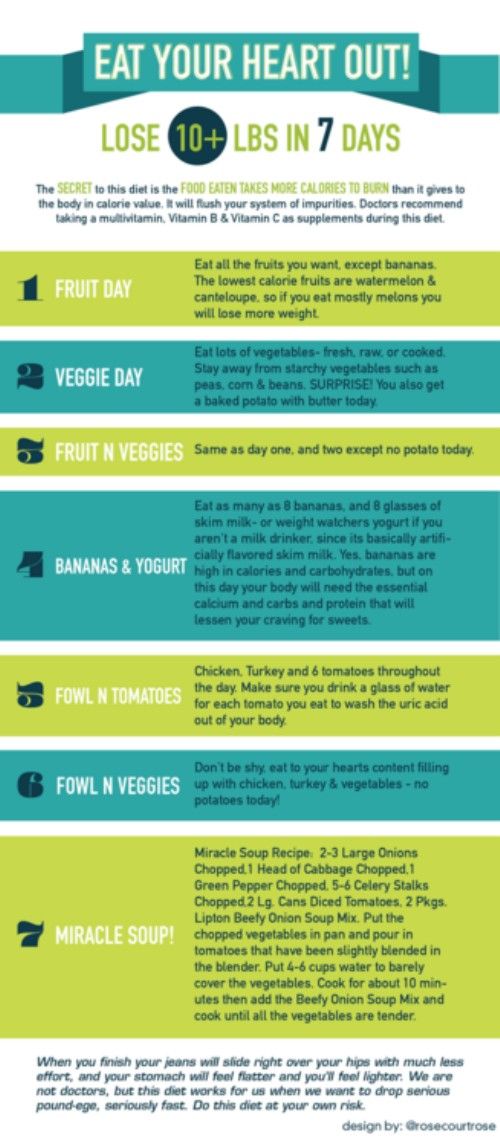
How to Lose 10+ Pounds in 7 Days

 7 Day Diet Plan

The Secret to this diet is the FOOD EATEN TAKES MORE CALORIES TO BURN than it gives to the body in calorie value.
It will flush your system of impurities.
Doctors recommend taking a multivitamin, Vitamin B and C as supplements during this diet.
losePounds7days-1
Source: healthdigezt.com

Fat Flush Water Recipe

 Fat Flush Water 

This is another version of the fat flush water, it also promotes energy and good health. I think it sounds delicious, it will be in my refrigerator in the next few days! This drink can play a huge role in your flat belly diet! Enjoy!

Ingredients: 

2 liters water
1 teaspoon freshly grated ginger
1 medium cucumber, sliced
1 medium lemon, sliced
12 small spearmint leaves

Place all ingredients in a large pitcher, let blend together overnight, the next day drink the whole pitcher during the course of the day. Hello fast weight loss!

Source: healthdigezt.com

8 Stretches to Start Your Morning


One of the best ways to start your day in a healthy way is to take a moment to ground your thoughts by stretching and intentionally breathing. It’s amazing what you can accomplish in less than seven minutes to set your day on the right path.

When you stretch deeply, you should always be warm. So performing this series after a morning workout or after a hot shower is optimal. If you do it right out of bed, make sure you stretch more gently.

Here are eight stretches to add to your morning routine to feel strong, flexible and grounded. These exercises cover all your major muscle groups and can be followed any time of day, including after your workouts.

Upper Back Release-300_1

1. Upper Back Release

Targets the upper back and back of shoulders.
Standing with feet hip-distance apart, clasp hands and round upper back keeping arms straight and active.
Think about the shoulder blades spreading wide across your back.
Hold stretch for 2-3 deep breaths.

Chest Release-300-2

2. Chest Release

Targets the chest, front of shoulders and biceps.
Holding a wall, door frame or window ledge with left arm, step forward with left leg and turn entire body to the right especially at the hips.
Hold stretch for 4-6 deep breaths increasing stretch with the pivot at the hips. Repeat on the other side.

Side Stretch-300-3

3. Side Stretch

Targets the IT band (outer thigh), obliques and shoulders.
Standing with right hand on bed or wall, cross left leg in front of right leg, feet pointing forward.
Shift into the left hip and reach left arm up and over head, creating a long line from the left ankle to the left fingertips.
Hold and take 2-3 deep inhales and exhales. Repeat on right.

Sitting Spine Twist-300-4

4. Seated Spinal Twist

Targets the spine, neck and shoulders.
Sitting on a chair or edge of bed with legs together, lengthen spine rotate from the waist, placing one hand behind you and the other hand on your outer thigh for support.
For a deeper stretch for the neck, turn your gaze to look over your shoulder as well.
Hold 2-3 deep breaths. Repeat other side.

Standing Hamstring Hinge-300-5

5. Standing Hamstring Stretch

Targets hamstrings.
Supporting yourself for balance as needed, bring right leg up onto a step or bench, increasing height as flexibility increases. Keep legs hips distance and parallel and keep back leg straight (if possible) and front foot flexed.

If you need to increase stretch, hinge at the hips (not the waist or back), keeping the spine completely straight. Don’t round the spine.
Take 4-6 deep breaths. Repeat other side.

Standing Quad Release-300-6

6. Standing Quad Stretch

Targets quadriceps.
Holding a chair, wall or bed for support, stand with feet hip-distance apart. Soften left knee and reach for your right foot or ankle, bending the right knee to point straight down to the floor.
Keep pelvis neutral and spine tall with the crown of your head reaching to the ceiling.
Hold for 4-6 deep breaths. Repeat other side.

Outer Hip Stretch-300-7

7. Outer Hip Stretch

Targets hips and outer thighs.
Lift left leg, knee bent, onto bed. Square off hips and make sure front knee is outside of front shoulder.
Keeping tailbone untucked and spine straight, hinge forward at the hips, placing hands on the bed for support.
Hold for 4-6 deep breaths then change sides.

Standing Forward Bend-300-8

8. Standing Forward Bend

Targets hamstrings and lower back.
Standing with feet hip-distance apart and knees slightly bent, hinge forward at the hips. Allow your upper body to hang over your legs and clasp elbows.

(Note: Do not “hang” from elbows if you have any lower back issues. Instead, place hands on floor or legs for support.)

Hold for 2-3 deep breaths while you gently shake your head no and even more gently nod your head yes. To come up, pull in abs and gently round up one vertebra at a time.

Source: healthdigezt.com

7 Treadmill Mistakes You Don’t Want To Make


Surprise: Running on a treadmill is not only about putting one foot in front of the other. With a few tweaks to your form, habits, and plan, you can get so much more out of your indoor running workout. The best place to start? Avoiding these seven treadmill errors:

Mistake #1: Not Having a Plan

You get on, you push “start,” and you crank up the speed. You go until the timer hits your predetermined time (or your body hits the wall), and you stop.

Not only is this workout uninspiring, it’s definitely not pushing you to your potential. “You’ll always do more work with a plan—always!” says LA-based running coach David Siik, creator of the Precision Running treadmill program at Equinox and author of a forthcoming book about running.

“Find a one- to three-day-a-week routine, and make the commitment to put the work back in workout.” (Need some help? Check out how to implement an interval or “hilly” treadmill plan here.) That said, following the same plan all the time isn’t ideal, either.

“The body limits gains when it isn’t challenged in a variety of ways,” says Sean Fortune, an NYC running and track coach and founder of Central Park Coaching. “Running fitness is earned by training the body with steady-state runs, progression runs, intervals, long runs, easy short runs, hill sprint runs, fartleks, tempos…” Not only that, mixing it up helps protect you from injury, so make sure you’re regularly trying something new.

Mistake #2: Skipping the Warm-Up

“The biggest mistake I see by far is people going too fast too soon,” says Fortune. “They start off from a dead standstill at a pace that is unsustainable, and inevitably slow down to a shuffle or start walking shortly after they begin.”

Instead, start by walking, progressively increasing to a jog for the first five to 10 minutes. After the first mile, you can crank it up if your workout calls for it. Not only will you not burn out this way, it’s safer for your body. On a treadmill, “you can still pull something even though you are on a softer surface than the road,” says Debbie Blair, running coach and board member of the Greater Long Island Running Club. The same goes for a cool-down—ease back out with five minutes of slower jogging or walking at the end.

Mistake #3: Ignoring the Incline

A gentle reminder: Treadmills have two variables—speed and incline. Too often, people just leave the incline at zero percent. Thing is, when you run in place indoors, you don’t get the wind resistance or varied terrain of an outdoor run. To better approximate the challenge, do even your steady-state treadmill runs at a one- to two-percent incline. And when designing your workouts, don’t forget to mix up the incline as well as the speed. Steeper work engages more of the glutes and hamstrings—and who doesn’t want a better butt?

Mistake #4: Holding On

Grasping the sides (especially for dear life) is bad news for so many reasons. First of all, you’re messing up your posture and your gait.

You’re also taking some of your bodyweight off your legs and not swinging your arms—effectively reducing your calorie burn. If you’re grasping because can’t keep up, slow down or reduce the incline. And once you are swinging, make sure you’re swinging correctly—your arm drive is almost as important as what you do with your legs.

“Using a small and swaying arm drive can cause you to rotate, and can eventually lead to all kinds of problems,” says Siik. Instead, engage the muscles in your shoulders and arms to keep your arms parallel to your legs, never letting your hands cross your midline, or driving them so hard that your hands end up at the top of your head. Get it right and you’ll reap major benefits: “A powerful leg and arm drive creates a great force that meets across your abdominals, giving you an incredible core workout—and a speedy path to a flat, tight stomach!” says Siik.

Mistake #5: Overthinking Your Stride

When it comes to your legs, we have some good news: Your body will generally figure this out on its own, without you overthinking it. However, sometimes people do over-anticipate a sprint, which can lead to too-large strides. “Be careful you’re never reaching forward with your legs,” says Siik. “It will cause your bodyweight to land in front of you, which is not so good for the knees.” Also, when running on an incline, shorten your stride and increase your turnover—a.k.a., how fast you move your legs—to more efficiently conquer the “hill.”

Mistake #6: Not Using the Whole Belt

The tendency to run right up against the rail is normal. After all, when that belt is moving at a pretty good clip, you don’t want to fly off the end. “But running so close to the front of the treadmill can confine your legs and arms from running with their natural free range of motion,” says Siik. So focus on utilizing the whole length, especially during a sprint when your stride opens up.

Mistake #7: Over-Controlling Your Breathing

Like your legs, your lungs are pretty freakin’ good at their job. “Your body is far smarter than you give it credit for, and it will work to take in all the air it needs, instinctively,” says Siik. “I see people all the time working on breathing exercise, trying to keep their breath under control when doing hard treadmill work. Stop!” That said, don’t let the “panic” of a sprint send your breathing too shallow.

To paraphrase those ubiquitous inspirational signs, stay calm and run on. Then, during the recoveries, slow your breathing with big inhales in through your nose and exhales out of your mouth.

Source: healthdigezt.com

Senin, 06 Oktober 2014

Simple and Effective Cardio and Strength Workouts for Beginners


One of the best ways to keep cardio simple, yet effective, is to try interval training. Interval training involves alternating high intensity exercise with recovery periods, allowing you to burn more calories, build endurance and get a great workout.

You can do this type of workout with any activity — walking, running, cycling, swimming or any cardio machine. Below is an example of a simple interval workout you can try at home, outside or at the gym:

5 minutes – Walk/jog to warm up
1 minute – Medium intensity jog or walk
1 minute – Faster, increasing speed or hill climbing to work at a medium-high intensity
1 minute – All out walking or running as fast as you can
2 minutes- Jog/walk to recover

Repeat 2-3 times
Keep in mind that any activity that gets your heart rate up counts as cardio, so you don’t need fancy equipment, gym memberships or workout plans for it to count.

Whether it’s walking, working in the yard or running up and down the stairs while doing chores, there are plenty of ways to fit in simple, short bursts of exercise.

Simple Strength Training
In getting back to basics with strength training, focus on whole body movements that work multiple muscle groups.

You can work your body in a more functional way while saving time. The following exercises make a great foundation for a simple strength workout that works every muscle in the body.

•Ball Squats
•Lunges
•Deadlifts
•Pushups
•Tricep Dips

It’s great that we have so much information available about exercise and, sometimes, we actually find something useful. However, if you’re confused about what to do and how to fit all this work into your life, get back to basics. Keep things simple and it’ll be that much easier to make exercise a routine.

Source: abouthealth.com

Power Play: Plyometrics for Runners


Power Play
Want to pump up your pace? Jump! Runners who did plyometrics for two months shaved seconds from their sprint times, shows a study in the Journal of Strength and Conditioning Research. That’s like tapping into your legs rocket boosters. Here’s how to go full throttle.

Prepare for takeoff. Dynamic stretches prime your muscles for jumping. Do 10 yards each of the following moves without stopping: A-skips (skip bringing front knee high), butt kicks, high knees, carioca (a side shuffle crossing one foot in front of the other), side shuffle, high knees with opposite elbows to the knee, A-skips into a lunge.

Catch air. Incorporate a few plyo moves like squat jumps and burpees twice a week, doing two sets of 10 to 12 reps. (Newbie strength trainers should begin with exercises like squats, lunges, and calf raises to build lower-body stability first.)

“Perform those plyometrics with fresh legs,” says Lovitt — on cross-training days or light runs like the one below.

Go easy on the knees. For plyo benefits without the pounding, do leg-machine exercises like the single-leg press, hamstring curl, and leg extension (set to 45 degrees) with a quick movement up and controlled motion down. You can also do lunges to the side, front and back with a similar approach: Lunge with control, then finish with an explosive return back to start.

The Plan
Put some bounce in your stride — and seriously crank up the calorie burn
Time (in minutes) Activity
0 to 3 Warm-up (light jog)
3 to 5 Dynamic stretches (see “takeoff” tip, above)
5 to 10 Run (moderate pace)
10 to 11 High skips (Aim to go as high as you can as you move forward, landing softly on balls of feet.)
11 to 16 Run (moderate pace)
16 to 17 Split squat jumps (Start in a low lunge and explore up, switching legs mid-air and landing with legs in opposite position.)
17 to 22 Run (moderate pace)
22 to 23 Bounding (Leap with every running stride, driving your knees forward as far as your stride allows.)
23 to 28 Run (moderate pace)
28 to 29 Tuck jumps (Stand with feet hip-width apart and jump, bringing knees toward chest; land lightly on balls of feet and immediately jump again.)
29 to 32 Cool-down (light jog)
32 to 35 Dynamic stretches (45 seconds each of leg swings to the side; straight-legged marches; slow-motion butt kicks, in which you briefly grab the toes of bent leg behind you; inchworms, where you bend to touch toes, then walk hands forward into a plank and walk the back to your feet)

Source: fitnessmagazine.com

Shape Up in 7 Minutes


1.  Snappy strengthening moves

one-legged-jump-400x400

Get more bang for your workout burst with these one-minute power moves from Equinox NYC instructor Omar Sandoval’s hot new Titan Method class.

Choose a move for the arms and shoulders, a move for the abs and back, and a move for the legs and butt and do all three exercises at a fast clip (hello, cardio!) before taking a 30-second rest; then whip through them again.

For the full Titan class effect, do any five moves back-to-back, rest 30 seconds, and repeat. For best results, slip this speed session in every other day.

2.  Arms & shoulders: Squat and press

squat-and-press-400x400-2

Stand with feet shoulder-width apart and a pair of 8- to 10-lb dumbbells between feet. Push hips back to lower into a squat (keep knees behind toes); grasp a dumbbell with each hand.

Engage core, push through feet, and rise to standing, bending elbows to bring weights near shoulders. Press weights overhead; lower weights back to shoulders, then back to floor. Repeat for 60 seconds.

3.  Arms & shoulders: Clean and press windmill

clean-press-windmill-400x400

Stand with feet shoulder-width and an 8- to 10-lb dumbbell between them. Push hips back to lower into squat (knees behind toes); grasp dumbbell with left hand. Push through feet and rise to standing, bringing dumbbell toward left shoulder; push it overhead.

Bend at waist to right, allowing right foot to turn out; right hand is on inside of right leg. Continue to bend sideways, sliding right hand down to foot, keeping left hand overhead. Reverse movement to return to squat; continue for 60 seconds.
Switch sides and repeat.

4.  Abs & back: Dumbbell plank

dumbbell-plank-move-400x400

Get into the “up” part of push-up position with feet wider than shoulder-width, hands each gripping a dumbbell directly below shoulders. Your body should be in a straight, diagonal line from head to heels (as shown). Hold for 60 seconds.

5.  Abs & back: Plank with side snatch

plank-side-snatch-400x400

Come to plank position with body straight, feet wider than shoulder-width, hands gripping 8- to 10-lb dumbbells.

Engage core muscles; in a single movement (keeping arms straight), twist at the waist (allowing toes to pivot) and lift dumbbell in left hand out to left and up overhead Return to plank position; continue for 60 seconds, then switch sides and repeat.

6.  Legs & butt: Shuffle dumbbell swing

shuffle-dumbbell-swing-400x400

Stand with feet wide, an 8- to 10-lb dumbbell between feet. Squat down (knees behind toes) and shuffle to left, then back to center; grab dumbbell with both hands. Straighten knees while turning legs and body to right, swinging weight up and straight out to right as if swinging a baseball bat.
Return to squat position and repeat on opposite side; continue alternating for 60 seconds.

7.  Legs & butt: Superhero jump

super-hero-jump-400x400

Get into “up” part of push-up position; step left foot forward into lunge position, leaving right hand on floor and lifting left hand out and back. Push into both feet and jump up onto left foot, raising right knee and touching left hand to it. Return to lunge, then push-up position.
Continue for 60 seconds, thenswitch sides and repeat.

Source: healthdigezt.com

The One Minute Full Body Workout


Find time for workouts!
No time for a full workout today? No sweat. If you can find just one free minute, then you can do this easy workout from fitness expert Keli Roberts. You’ll hit all the major muscle groups and—if you really push—get a cardio surge as well.

image


Power push-up plank

Do the moves one right after the other with no resting in between. Your goal is to fit in a set in just 60 seconds, though it’ll probably take a little longer at first. (Beginners, shoot for two minutes.) Fit as many of these workouts into your day as you can.

Stand with feet a little wider than shoulders
(top left) ; squat down and place hands on floor in front of feet.
Jump or walk feet back into plank position (middle), keeping body lengthened by tightening abs; hold for a count of 8.

Do 2 push-ups (on your toes, if possible, or on your knees; bottom right); jump or walk feet toward hands, return to a low-squat position on feet, and stand up. Repeat entire move 4 more times.

image

Superman
Lie on your stomach with arms stretched overhead and legs straight. Lengthen body, tuck tailbone to protect your lower back, and lift arms and legs at the same time. Hold for 10 seconds.

image

Bicycle abs
Lie on back with hands behind head, legs and feet lifted, knees bent to 90-degree angle. Lift head and shoulders slightly off mat. Rotate torso so left shoulder is moving toward right knee. At the same time, extend and lower left leg. Alternate sides for a total of 10 reps per side.

Source: Health.com